Bimal Roy (1909-1966)

Bimal Roy
Bimal Roy’s fascination with the outer limits of the human experience gave cinema some of its most unforgettably complex characters. For instance: Kalyani of Bandini, whose murder of her ex-lover’s wife is not morally justifiable; the outcaste Sujata, labouring under an inferiority complex; the defeatist Devdas; the vengeful sprite Madhumati; and Sambhu Mahato, the ever-toiling son of the soil of Do Bigha Zameen.
Most of Roy’s films were celluloid biographies that carried his all-seeing camera right into the heart of the human enigma.
The camera was Bimal Roy’s most trusted directorial ally. After all, this soft spoken scion of a well-to-do Bengali family had entered filmdom as a New Theatres cameraman. With Roy’s cinematography in Barua’s Devdas (’35), the ‘image’ dethroned the spoken word’ as the unit of communication. Inspired by the emphasis on framing over verisimilitude in German expressionist cinema, Bimal Roy created a fascinating chiaroscuro that made Devdas as much the cinematographer’s expression of art as the director’s.
Bimal Roy turned director with the critically acclaimed Hamrahi (’45), but it was only with Do Bigha Zameen (’53), that he was recognized as one of the country’s foremost filmmakers. Roy was inspired to film this story of an Indian farmer (Balraj Sahni) and his doomed struggle to hold onto his plot of land, while returning home on a Bombay local train after watching Vittorio de Sica’s Bicycle Thief at the Film Festival. Impressed by the Italian neo-realist movement, Roy too made his characters don clothes acquired from Chor Bazaar.
More importantly, this master of the mise en scene created a fascinating tableaux of images (the rain lashing the fields; Sahni, his wife and son’s open-mouthed wonderment; the factory soot blackening their land) that emphasized the need to design a scene to convey realism too.
Committed to better cinema, Roy’s production house next made Devdas (’55). He further isolated the brilliance of Saratchandra’s lines by resorting to an image-bound narrative (its hero, Dilip Kumar pointed out that he spoke only a few dozen statements throughout the film). Devdas, however, was not commercially successful. But, even when Bimal Roy took Ritwick Ghatak’s story and made a moneyspinning musical, Madhumati (’58), the result was sheer poetry in motion.
Bimal Roy’s two much-acclaimed Nutan films, Sujata (’59) and Bandini (’63), saw him returning to realistic imperatives. Three years before his death, Roy made what is considered by many to be his greatest chef d’oeuvre, Bandini. Roy once again brilliantly used imagery in what is perhaps his best executed scene — when Nutan wilfully murders Ashok Kumar’s shrewish, neurotic wife. A welder is at work in the background (his sparks indicative of Nutan’s state of mind) when, beaten by the constant hammering of circumstances, her hands close around a bottle of poison, while a play of light and shade frames the scene.
Bimal Roy’s work was infinitely more effective when shrouded in shadows than when bathed in light.
 ABOUT THIS AUTHOR
 Cineplot Music
 Cineplot Photo Gallery
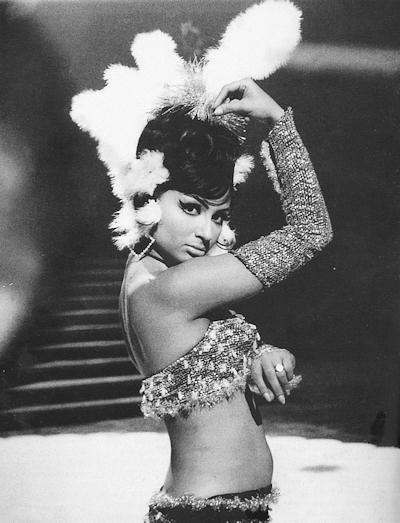 Sharmila Tagore
 K. Asif (1924 -1971)
 Naseebo Lal
 Diljeet Mirza
 Nadeem
Reply